signs of roof problems: Curling/buckling shingles |
|
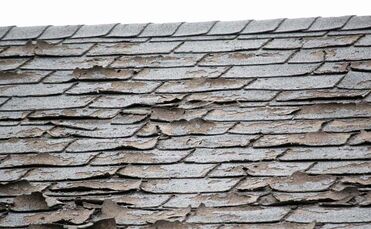
Thunderstorms, heat, and humidity are hard on your shingles, making it even more important to keep an eye on your roof for damage. The damage usually appears in the form of curling or buckling, which signifies major problems with the roof. The most common cause of curling and buckling is moisture in the roof decking or underlayment. Shingles that curl have rounded edges, giving the appearance of sinking (a concave "u" shape). It is common for roofs to curl, and it negatively impacts the appearance of your roof. Wear and tear and poor quality materials can cause curling.
what causes curling shingles?
In most cases, buckling and curling is caused by moisture. The roof decking can absorb moisture during the process of replacing your roof before installation. It is possible for the roof shingles to buckle and the decking to shift due to excess moisture. The question is, where does the moisture come from? Moisture is often caused by inadequate attic ventilation. When your attic isn't properly ventilated, that hot, moist air is trapped in the attic, causing condensation that can make your shingles curl. Mold and rot can result from a lack of airflow and moisture backup in your attic. Additionally, in the hottest months of the year, your poorly ventilated attic causes your air conditioner to work even harder, increasing your utility bill by hundreds of dollars a year. A roof that is curling as a result of inadequate attic ventilation will wear out sooner than it should, allowing high winds and hail to further damage the roof.
A roof that is improperly installed may buckle or curl as well. By using insufficient nails per shingle or placing them incorrectly, the roof installer can cause the shingles to loosen, causing them to curl or buckle. In addition to improper alignment, the tar lines (adhesive strips on individual shingles) can also buckle or curl. The shingles can even fall off if this happens during installation.
Roofs with multiple layers - Many homeowners install a new roof over their current, older roof. Professional roofers usually do not recommend this method, but it's a cost-saving measure that homeowners may choose instead of removing the old roof and replacing it with all new materials. The second layer of shingles is less securely placed, putting it at risk for curling and storm damage.
A shingling's curling is often caused by age. In other words, your roof might be too old. It's probably time to re-roof your asphalt roof if the shingles are curling and it was installed 12-15 years ago. Taking care of this sooner rather than later will save you time and money in the long run.
A roof that is improperly installed may buckle or curl as well. By using insufficient nails per shingle or placing them incorrectly, the roof installer can cause the shingles to loosen, causing them to curl or buckle. In addition to improper alignment, the tar lines (adhesive strips on individual shingles) can also buckle or curl. The shingles can even fall off if this happens during installation.
Roofs with multiple layers - Many homeowners install a new roof over their current, older roof. Professional roofers usually do not recommend this method, but it's a cost-saving measure that homeowners may choose instead of removing the old roof and replacing it with all new materials. The second layer of shingles is less securely placed, putting it at risk for curling and storm damage.
A shingling's curling is often caused by age. In other words, your roof might be too old. It's probably time to re-roof your asphalt roof if the shingles are curling and it was installed 12-15 years ago. Taking care of this sooner rather than later will save you time and money in the long run.
causes of buckling shingles
- It is normal to encounter high humidity in the summer months, and as the old roof is torn off, the wood deck becomes exposed and absorbs moisture. When the moisture content of the wood increases, it can cause the decking to move.
- During the installation of a new roof, moisture gets trapped inside the system, and the roofing felt used as underlayment can become wet and wrinkled.
- Due to tighter construction and higher insulation levels, many homes are not properly ventilated.
- In a roof with less than 1/8" of space between the sheathing, buckling can occur due to retraction and expansion.
- If the decking has not been properly conditioned to be in equilibrium with the environment where it will be installed, the natural expansion or contractions could cause buckling. This is something a roofing manufacturer must approve.
what to do if your shingles are curling
Replacing lifting or curled shingles is the most cost-effective way to fix the problem. While improving air circulation in your attic is imperative, addressing damaged shingles should take precedence. In order to prevent rupturing the roofing materials, a professional roofer can inspect your roof without walking on the curled shingles.
Roofing shingles that are curled can be sealed if the damage is not severe. Nevertheless, replacing curled/lifted shingles is usually the best way to get your roof back to its original functional and aesthetic state. However, if your roof has reached the end of its useful life and most of the shingles are curling or lifting, it might be time to replace your roof.
Curled or lifting shingles indicate a problem with your roof. Work with a local, reputable roofing contractor for all your roof repair or replacement needs. We can provide a practical, long-term solution to curling roofs and lifting roofs in the Broken Arrow area. Contact us at 918-948-8221 for professional help with all your roofing needs.
Roofing shingles that are curled can be sealed if the damage is not severe. Nevertheless, replacing curled/lifted shingles is usually the best way to get your roof back to its original functional and aesthetic state. However, if your roof has reached the end of its useful life and most of the shingles are curling or lifting, it might be time to replace your roof.
Curled or lifting shingles indicate a problem with your roof. Work with a local, reputable roofing contractor for all your roof repair or replacement needs. We can provide a practical, long-term solution to curling roofs and lifting roofs in the Broken Arrow area. Contact us at 918-948-8221 for professional help with all your roofing needs.